
Why Preventative Dental Care Is Important to the Whole Family
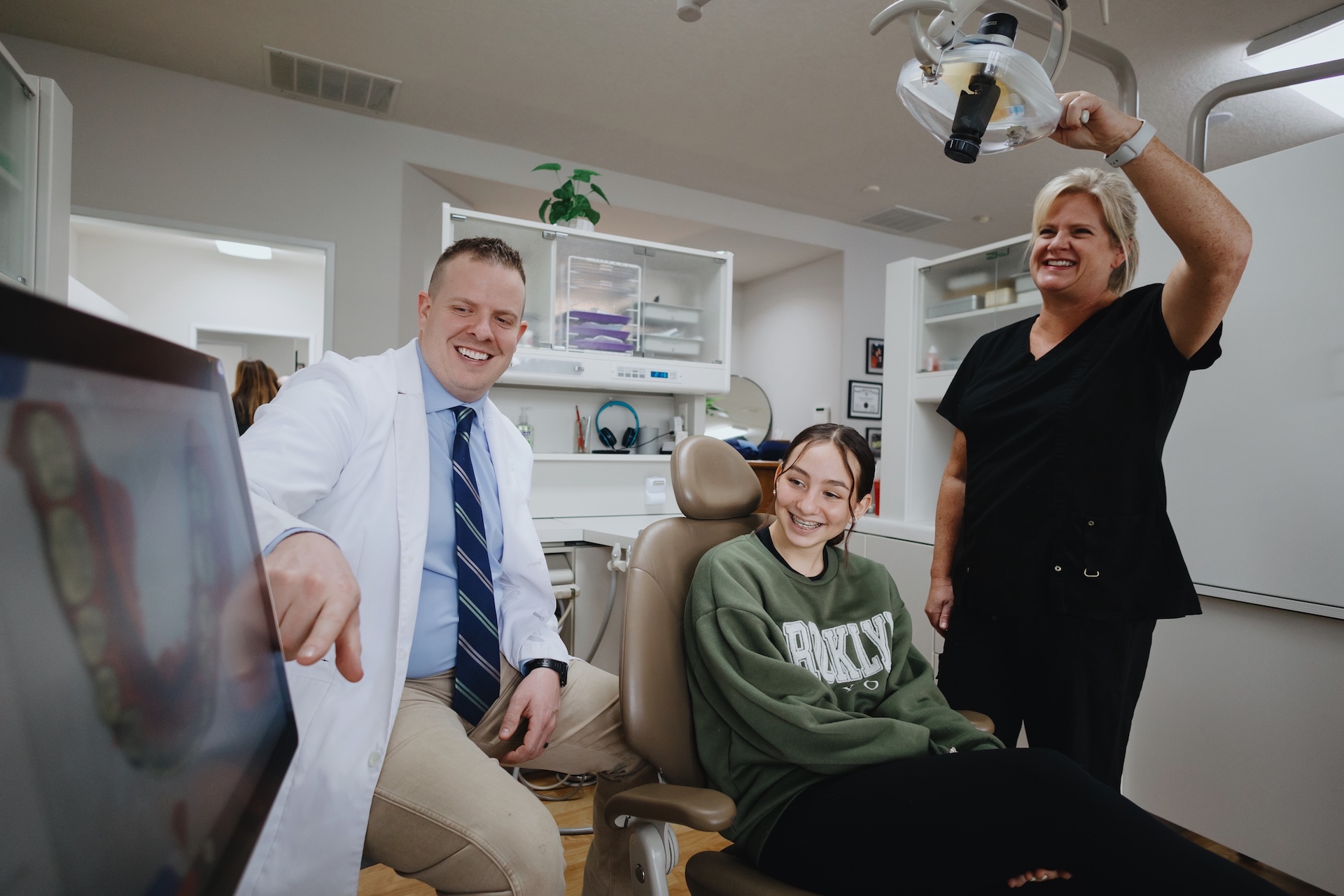
Why Preventative Dental Care Matters for Every Member of Your Family
Preventative dental care is the practice of maintaining your oral health before problems develop, rather than addressing them after they do. It includes regular professional cleanings, routine exams, and consistent at-home hygiene habits that work together to protect your teeth and gums over time. At North Hills Dental, preventative care is the foundation of how Dr. Josh Rowley and the team approach every appointment, for patients of every age.
Dental needs change throughout life. A child coming in for their first visit has different needs than a teenager, an adult managing a busy schedule, or an older patient navigating changes in their oral health. Preventative care accounts for all of it. The goal at each stage is the same: identify concerns early, support healthy habits, and keep small issues from becoming larger ones.
Across all ages, preventative care generally includes:
- Professional cleanings to remove buildup that brushing and flossing at home cannot fully address
- Comprehensive exams to assess the health of your teeth, gums, and surrounding structures
- Guidance on at-home care that is specific to your situation, not generic advice
- Age-appropriate services for children, adults, and older family members
Continue reading this article to discover what preventative care includes, why it matters for your overall health, how needs shift across life stages, and what to expect at North Hills Dental.
Quick Overview
- Preventative dental care combines professional visits and daily home habits to protect your oral health before problems develop.
- Oral health is connected to overall health, and conditions like gum disease can have effects that extend beyond the mouth.
- Dental needs are different at every life stage, and a good preventative approach accounts for those differences.
- Gum disease is common, often symptom-free in its early stages, and much more manageable when caught during routine visits.
What Preventative Dental Care Actually Includes
Preventative care covers more ground than a cleaning and a reminder to floss. It includes both the professional services provided at each visit and the daily habits patients maintain at home. Both matter, and neither fully replaces the other.
A preventative visit at North Hills Dental typically includes:
- Routine exams to assess the health of your teeth, gums, and jaw
- Professional cleanings to remove plaque and tartar buildup that brushing and flossing cannot fully address
- X-rays to identify issues developing between or beneath tooth surfaces before they become visible or symptomatic
- Oral cancer screenings, which are a standard part of a thorough exam
- Fluoride treatments to help strengthen enamel and support cavity resistance
- Dental sealants, particularly for children, to protect the chewing surfaces of back teeth where decay most often begins
At home, consistent brushing and flossing remain the foundation of good oral health. Professional care reinforces those habits by addressing what daily hygiene cannot reach on its own. The two work together over time.
How Preventative Care Protects Your Overall Health
Oral health does not exist in isolation from the rest of the body. Medical research has established connections between chronic oral conditions, particularly gum disease, and a number of systemic health concerns. This is one reason why consistent preventative care matters beyond the condition of your teeth alone.
Gum disease is an inflammatory condition. When left unaddressed, the bacteria and inflammation associated with it can affect other systems in the body. Medical and dental professionals recognize this connection, and it is reflected in how thorough dental care is approached. Some of the health areas most commonly discussed in relation to gum disease include:
- Cardiovascular health
- Blood sugar regulation and diabetes management
- Pregnancy health and outcomes
- Respiratory health, particularly in older adults
At North Hills Dental, your overall health history is part of every visit. When Dr. Rowley or the team asks about medications, recent health changes, or existing conditions, it is because that information shapes how your care is planned and delivered. The mouth is not treated as a separate concern, but rather it is understood as part of your broader health picture.
Routine preventative visits create the opportunity to identify early signs of gum disease before they progress into something harder to manage. That is a meaningful part of what these appointments accomplish, even when nothing feels wrong.
Dental Care Through Every Life Stage
Dental needs change as people age, and preventive care looks different at each stage of life. At North Hills Dental, Dr. Rowley sees patients of all ages, from young children coming in for their first visit to older adults managing long-term oral health. Understanding what each stage requires helps the team provide care that is appropriate and consistent over time.
Here is a general overview of what preventive care addresses at each stage:
- Young children: The first dental visit is recommended around the time the first tooth appears, or by age one. Early visits allow the dentist to monitor development, address any concerns, and help parents establish a foundation for good oral hygiene at home. Sealants may be recommended as back teeth come in to help protect surfaces where cavities commonly develop.
- School-age children: This stage involves monitoring how the teeth and jaw are developing together. It is also an appropriate time to discuss protective mouthguards for children who participate in sports.
- Teens: Orthodontic needs often become apparent during the teen years, and wisdom teeth begin to develop during this period as well. Monitoring both allows for more informed decisions as changes occur.
- Adults: Gum disease risk tends to increase with age, making consistent professional cleanings and thorough exams an important part of ongoing care. Identifying small issues early helps avoid more involved treatment down the road.
- Older adults: Dry mouth, changes in bone density, and questions about tooth replacement options, including dental implants, are common topics at this stage. The team takes time to address these concerns thoroughly and without rushing.
Because care needs vary from person to person, North Hills Dental takes an individualized approach at every visit.
Why Delaying Dental Care Often Makes Things More Complicated
Dental problems rarely stay the same size. When something small goes unaddressed, it tends to progress, and what could have been a straightforward treatment at one stage often becomes a more involved one later. That's not meant to alarm anyone. It's simply how dental disease works, and it's one of the clearest reasons consistent preventative care matters.
A few examples of how this progression typically looks:
- Early cavity: can often be addressed with a tooth-colored filling
- Advanced cavity: may require root canal therapy, a crown, or extraction
- Early gum inflammation: typically managed with a professional cleaning and monitoring
- Advanced gum disease: may involve deep cleaning, additional treatment, or bone loss that cannot be reversed
- Cracked tooth caught early: may be restorable with a crown
- Cracked tooth caught late: may result in extraction and the need for tooth replacement
Dental anxiety and concerns about cost are among the most common reasons people put off care. Both are understandable, and both are things the team at North Hills Dental is willing to talk through openly. The goal is to make sure those concerns don't stand in the way of getting a clear picture of where your oral health stands.
Gum Disease: The Preventable Condition Most People Overlook
Gum disease is one of the more common conditions seen in a dental practice, and one of the more frequently missed by patients. In its early stages, it often produces no pain and no obvious symptoms. Many people learn they have it during a routine exam, not because something felt wrong.
Gum disease is an infection of the tissues that hold your teeth in place. It begins as gingivitis, a mild inflammation caused by plaque buildup along the gumline. At this stage, you may notice some bleeding when you brush, or you may notice nothing at all. When gingivitis is not addressed, it can progress into periodontitis, a more serious condition in which the infection begins to damage the bone and connective tissue that support your teeth. Over time, this can lead to loosening and tooth loss.
Consistent professional care is one of the most reliable ways to catch gum disease before it advances. During a routine cleaning and exam at North Hills Dental, the team evaluates more than the surface of your teeth. They are looking for early signs that are not visible to most patients, including:
- Gum pocket depth measurements that indicate inflammation or bone loss
- Bleeding patterns and tissue changes around the gumline
- Buildup below the gumline that brushing and flossing cannot reach
When these signs are identified early, treatment is typically straightforward. When they are not, the condition becomes more involved to manage and the damage to supporting structures may not be fully reversible.
Building Good Dental Habits at Home
Professional cleanings and consistent home care work together. What your dental team does at each visit supports what you do every day, and neither replaces the other.
The fundamentals are straightforward. Brush twice a day for two full minutes using a soft-bristled brush, angling the bristles slightly toward the gumline where plaque tends to accumulate. Floss once a day, ideally before bed, so food and plaque are not sitting against your teeth overnight. If traditional floss is difficult to use consistently, floss picks or a water flosser are reasonable alternatives.
Diet also has a meaningful effect on oral health. A few things worth understanding:
- Sugary foods and drinks feed the bacteria responsible for tooth decay, and how often you consume them matters, not just how much
- Acidic beverages like soda, coffee, and citrus juice can temporarily soften enamel, so rinsing with water afterward is a simple protective habit
- Frequent snacking throughout the day gives teeth less time to recover between acid exposures compared to eating at regular mealtimes
At North Hills Dental, home care guidance is part of every visit. The hygiene team reviews what is actually happening in your mouth and offers recommendations specific to your situation.
How North Hills Dental Approaches Preventative Care
At North Hills Dental, preventative care is the foundation of long-term oral health. The goal isn't simply to clean teeth and move on, but rather, we want to identify small concerns before they become larger, more costly problems and help patients maintain healthy smiles for years to come.
Each visit begins with a comprehensive evaluation. Dr. Rowley and the team assess your teeth, gums, existing dental work, bite alignment, and any areas that may need monitoring. By looking at the full picture rather than focusing on a single issue, we can make recommendations that support both your immediate and long-term oral health.
When something is identified during an exam or on an X-ray, we take the time to explain what we're seeing, why it matters, and what options are available. Our purpose is to make sure you feel informed and confident about your care, not rushed through a checklist of recommendations.
We also believe there is real value in continuity. Seeing the same dental team over time allows us to track changes, monitor ongoing concerns, and build a deeper understanding of your oral health history. That familiarity helps us provide more personalized care and often allows us to catch potential issues before they become more significant.
Preventative dentistry works best when it becomes a partnership. We're here to provide the guidance, education, and professional care you need to stay ahead of problems and keep your smile healthy for the long term.
We'd Be Glad to Care for Your Family
If you're looking for a dental home in Hillsboro where your family will be treated with genuine care and attention, North Hills Dental is accepting new patients. The office is located at 4440 Northeast Cornell Road, with convenient parking and a team that takes the time to get to know each patient as an individual.
New patients can expect a thorough first visit that includes:
- A complete exam so Dr. Rowley can understand your current oral health
- X-rays and a professional cleaning, when appropriate for your visit
- A straightforward conversation about any findings and what, if anything, to consider next
Preventative care works best when it's consistent, and that starts with having a practice you feel comfortable returning to. The office is open Monday through Thursday, 8:00 a.m. to 5:00 p.m. To schedule an appointment for yourself or your family, you can reach us through our website or call (503) 648-4431. We look forward to hearing from you!
connect with us
We look forward to meeting you.
Call (503) 648-4431 or request an appointment online to set up your first visit. We’ll be in touch soon.
